
Field Notes · The Limit
Six inches, explained
Every page on this site repeats the same number: stems up to six inches in diameter at breast height. It's the most important line in our scope — so here's exactly what it means, how to check it yourself, and what happens to everything on the far side of it.
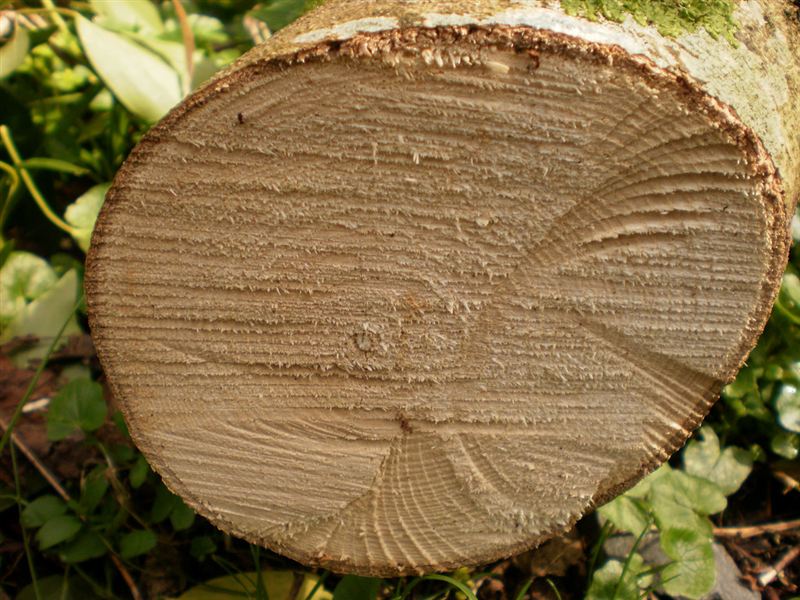
How is six inches measured?
Foresters measure a standing tree's diameter at breast height — four and a half feet above the ground, on the uphill side — because that's above the flare of the roots, where the number is consistent from tree to tree. That's the measurement our six-inch line uses. A stem can be wider than six inches right at the ground and still sit inside the line at breast height.
How can I check a stem myself?
Wrap a tape measure around it at chest height. A six-inch stem measures about nineteen inches around — circumference is diameter times pi, and six times 3.14 comes to a little under nineteen. Anything that tapes under that is inside the line. You don't need to do this before getting in touch; every stem that matters gets measured on the walk. But it's a fast way to know what your land is made of.
What falls inside the line?
Most of what makes land unusable: brush, saplings, invasive thickets like barberry, buckthorn, and bittersweet, old-field growth closing back in, and the dense softwood understory that hides a view. That's the material forestry mulching is built for — and on a typical overgrown parcel, it's the bulk of what stands between you and ground you can actually use.
What happens to the bigger trees?
They stay. Stems over six inches are flagged on the walk and left standing — and they're usually the trees worth keeping anyway: the canopy that shades the ground, the mature pines and hardwoods that frame a view once the growth around them is gone. Opening the woods around them is often the whole point.
If a larger tree genuinely needs to come down, that's work for a tree service or a timber harvest, not a mulcher. We'll say so on the walk and point you to the right kind of operator.
Why draw the line at six inches?
Because that's where the cut stays clean. The drum runs on the carrier's high-flow hydraulics, and up to six inches it processes a stem into chips in one controlled pass. Push well past that and the work turns into stalling, tearing, and ragged breaks — slower, rougher, and harder on the ground. A big machine can chew a big tree, but it shouldn't, and a company that says yes to everything is telling you something.
What about the stumps?
Inside the mulched zones, stems are cut flush — no stump more than two inches above grade. The roots stay in the ground, and that's deliberate: the root mat is what holds the soil together, and it's why a mulched property doesn't rut, wash out, or turn to mud. Pulling stumps is excavation, which is outside our scope; if your plans need stumps out — a foundation, a driveway, a septic field — that's a conversation for the walk.
What does it mean for my project?
The six-inch line decides what's in scope. The density of everything under it decides how long the work takes — which is why density gets counted on foot instead of guessed from the road, and why the price comes after the walk, not before.
Not Sure What You Have?
We'll measure it with you
Put the property in the form. On the walk, every stem that matters gets flagged — inside the line or out — before any number exists.
Start Your Project Forestry mulching only · Stems to 6 in.