
How It Works
From inquiry to walkthrough
Every ELS project follows the same seven steps, from a three-minute inquiry to a completion walkthrough against the written spec. The balance is due only when the ground matches the paper.
-
The inquiry
Three minutes on the form: where the property is, how much you want opened, and what you want the land to become — a view corridor, a walking woods, and a building lot are three different projects on the same acre.
-
A real conversation
Chris calls — a person, not a menu — to talk through the property and set up the site walk. One thing that won't happen on that call: a quote. We don't sell guesses.
-
The site walk
We walk the property with you, on foot — the boundary flagged and GPS-traced, stem density counted, retention trees marked, access assessed. If the project needs more than mulching, we say so here and point you to the right operator.
-
One number, in writing
One document: the mapped zones, fixed-price scope options, the finish specification, and the guarantee. No pressure to sign on the spot — the number is fixed today and tomorrow.
-
The deposit locks your dates
A 50% deposit holds your place on the schedule, every project, every size. The balance is due at the completion walkthrough and not before, paid through the proposal's secure link — check, ACH, or card.
-
The work
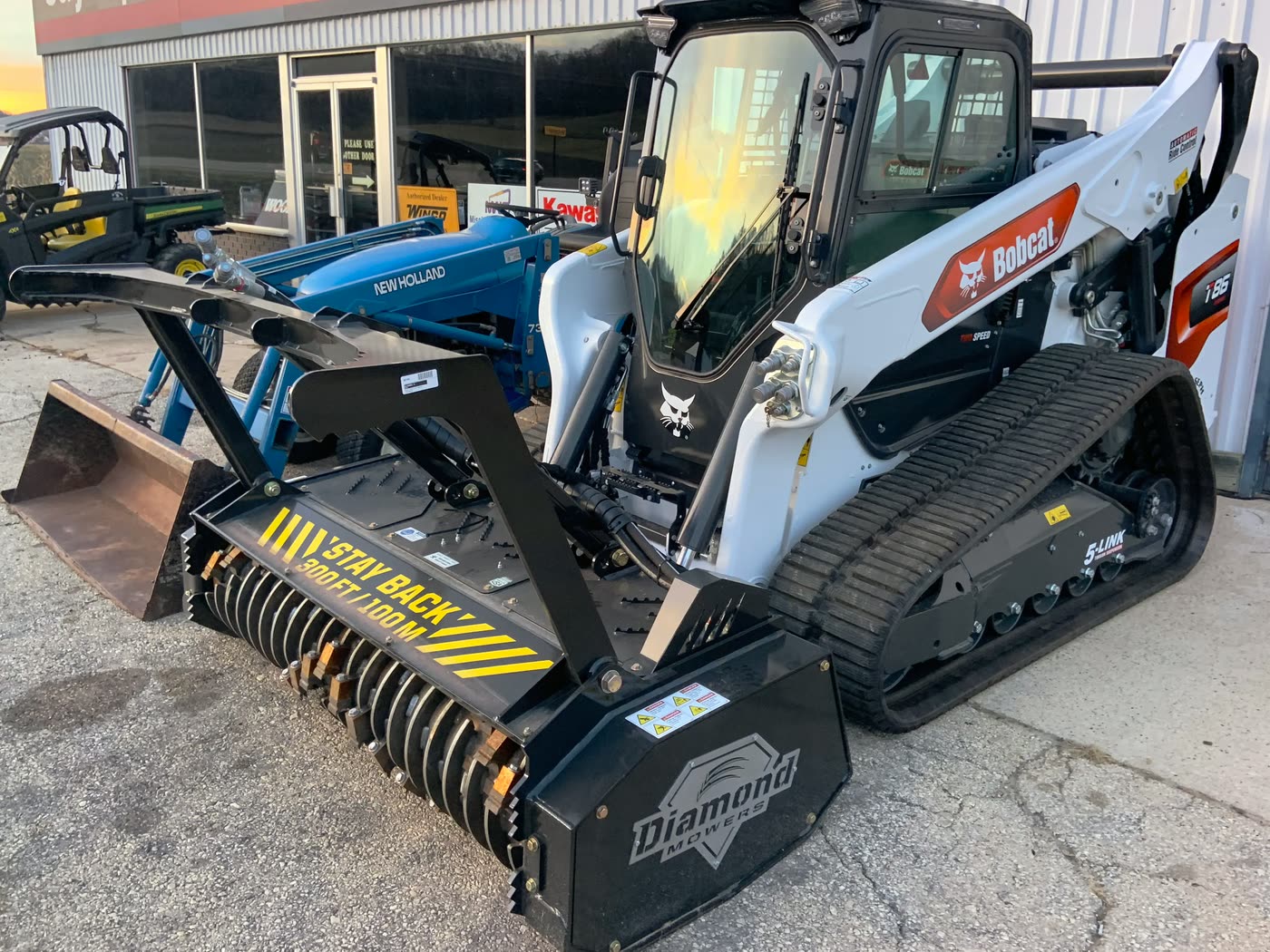
One machine, one operator, working the flagged zones. Most projects finish within days — no haulers to wait on, no burn windows to hit. Retention trees are protected; the root mat stays in the ground.
-
The walkthrough
We walk the finished property together against the written spec — mulch depth, stump height, boundary tolerance, retention trees. Anything short gets corrected before you owe the balance.
How Pricing Works
One number. No meter running.
You'll never see a published rate from us — not because pricing is a secret, but because a unit rate is the wrong instrument for this work. Here's the reasoning, in full.
Why not by the hour or by the acre?
A unit rate tells you what we estimated, not what the outcome is worth or what you'll actually pay. A dense acre can take three to four times longer than light brush — pricing by the unit invites a meaningless comparison, and gives us an excuse for overruns. We refuse both.
What the fixed price means
The number on your proposal is the number you pay, start to finish. If the ground turns out denser than we estimated, that's our cost to absorb, not an overage you get billed for — the terrain risk sits with the company running the machine, not the family who owns the property.
What the number covers
Every project investment covers the same three things: the equipment and its operation, mobilization to your property, and the insurance and support behind the work. One total — no line-item negotiation, no surprise fees.
Why it's quoted only after the walk
Every number in your proposal is built from data collected on foot — GPS boundary tracing, on-site density counts, access assessment — not estimated from the road or guessed from a satellite photo. That's the only kind of price that can honestly be called fixed.
What we rate on the walk
Every property is rated independently on three factors, each on the same simple three-point scale. This is what shapes your fixed price — we don't publish the math behind it, the same reason you'll never see a published rate from us, but you should know exactly what we're looking at when we're standing on your ground.
Access
Getting the machine to the work
- Easy — direct pull-in, no gate or width constraints
- Moderate — narrow or gated entry, extra maneuvering
- Difficult — long carry-in, tight or obstructed entry
Slope
The grade of the ground itself
- Easy — flat to gentle grade
- Moderate — moderate grade
- Difficult — steep to very steep, approaching the machine's rated limit
Vegetation Density
What's actually growing there
- Easy — open ground to scattered saplings, light brush
- Moderate — established saplings, moderate undergrowth
- Difficult — thick underbrush, the densest growth we take on
Your Choice On Every Proposal
Choose scope — never quality
Most proposals present up to three fixed-price options for the same property. Every option carries the identical finish specification and the identical guarantee. The only thing that changes is how much ground gets opened.
Option One
The priority ground
The zones that matter first — access, the immediate view, the ground around the house. A complete, finished project on its own.
Option Two
The connected property
The priority zones plus the land that ties them together — trails between clearings, the full sightline, the usable middle ground.
Option Three
The whole parcel
Every in-scope acre, opened in one mobilization — the most efficient way to treat a property, and priced accordingly as one fixed total.
Behind Every Step
5/5, or we make it right.
If any part of the finished work falls short of what's specified in your proposal, we return and correct it before you owe the balance. And the price never moves once signed — density surprises are our risk, not yours.
Step One
Start with the three-minute form
Tell us about the property and what you want it to become. Chris reads every submission personally.
Start Your Project No obligation · No pressure to sign on the spot